From the Ground
We started by listening.
Before a single credit, before the methodology — we sit down with the people who hold the carbon. This is the community co-design behind GreenKwacha, district by district, as it happens.
Seen from above
The land we’re measuring.
Recent satellite imagery of the Lower Shire valley around Chikwawa — the same view our MRV work draws on to track forest cover over time.
May 2026
Lower Shire — co-design
Chikwawa & Nsanje districts, southern Malawi
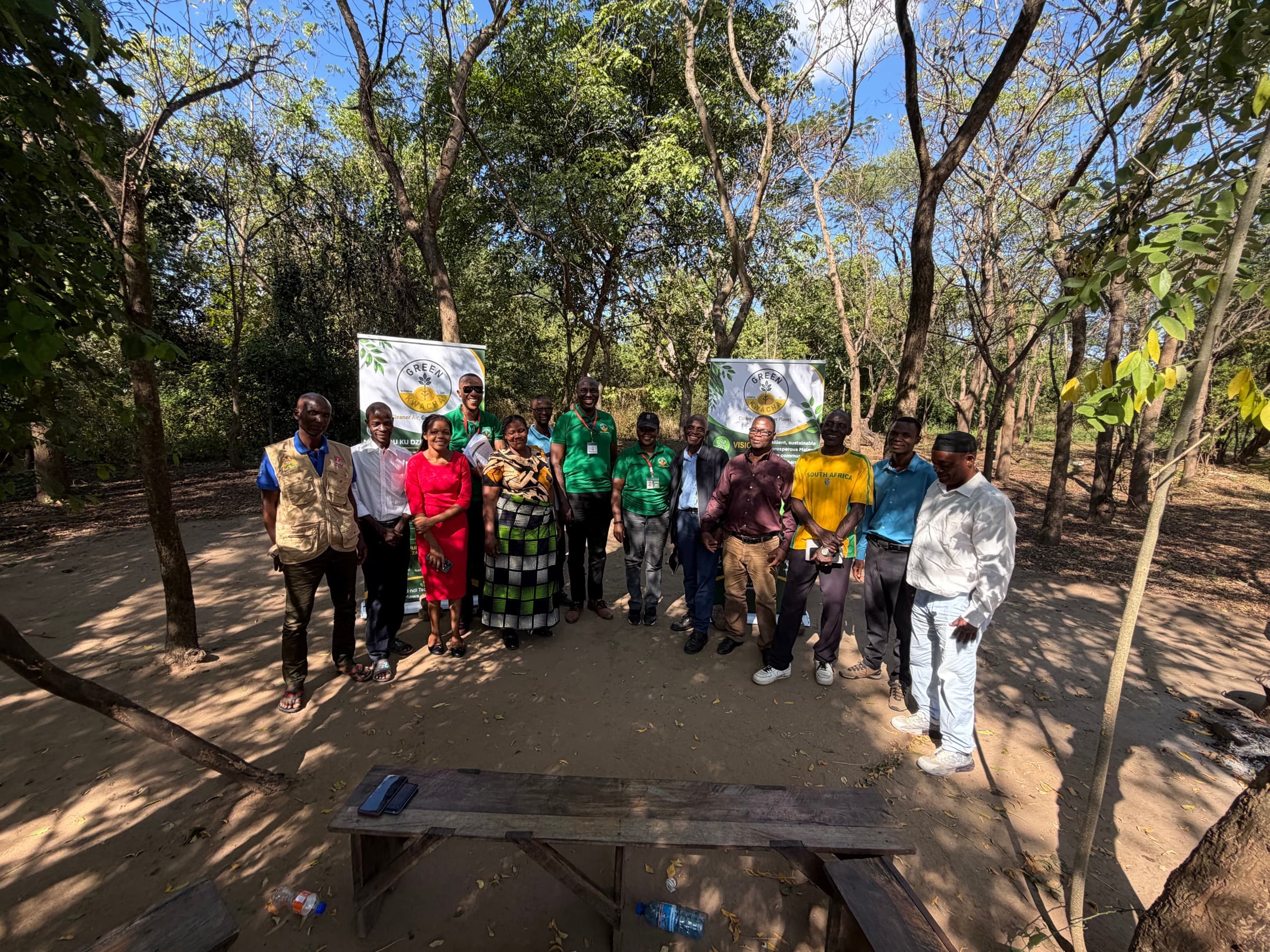
Who we met
- District Commissioners
- District Forestry Offices
- Traditional Authorities & chiefs
- Village Natural Resource Management Committees
- Smallholder farmers & cooperatives
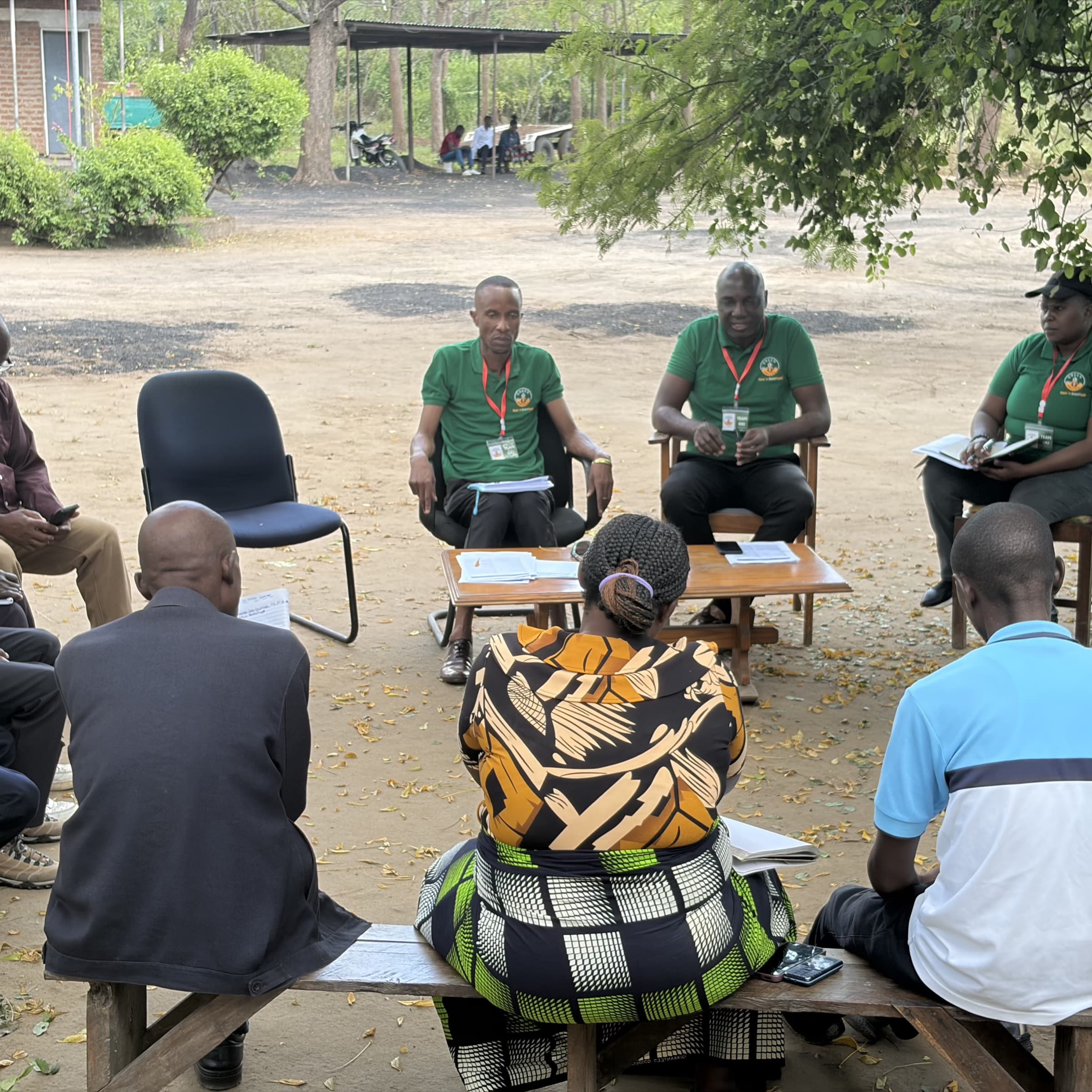
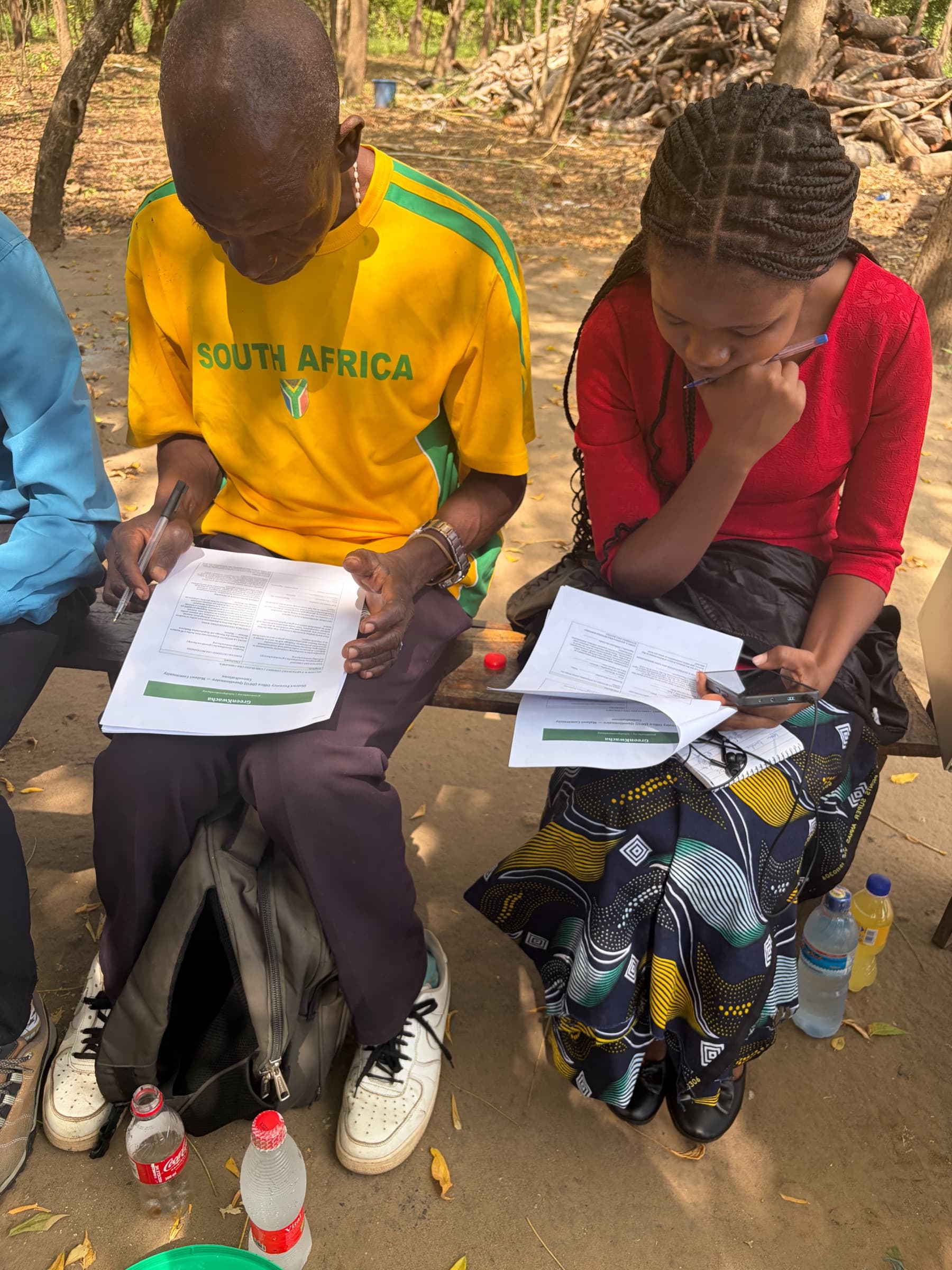
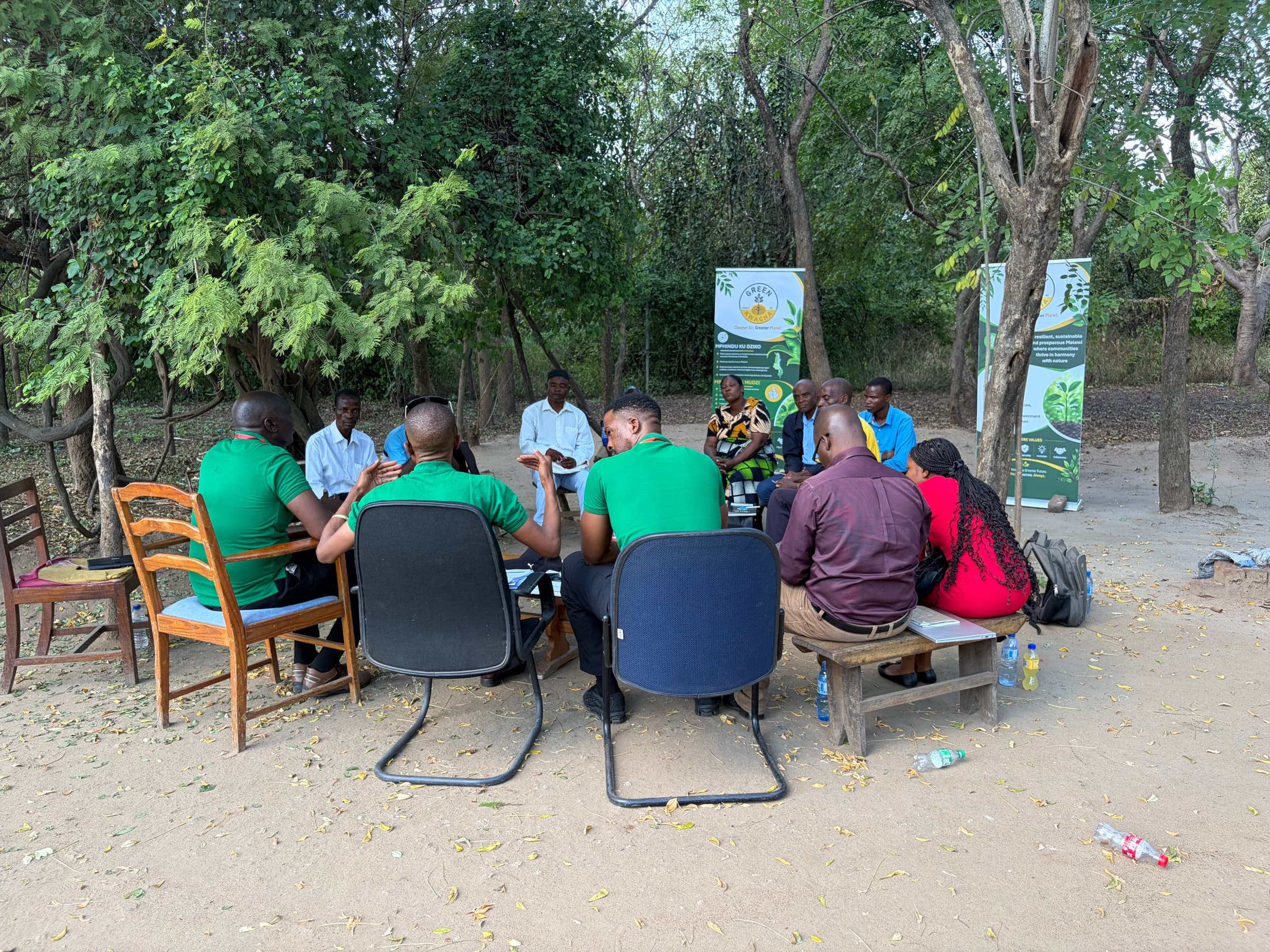
We didn't start GreenKwacha by writing a methodology. We started by listening. In May 2026 the team spent time in Chikwawa and Nsanje — the Lower Shire — sitting down with the people who would actually hold the carbon: chiefs, district forestry officers, farmers, and the committees that govern community land. We ran listening sessions and questionnaires in English and Chichewa. What follows is what they told us.
What they told us
Make the benefit clear, first
Across both districts, the single most repeated ask from forestry officials was a clear, transparent — often mandatory — benefit-sharing mechanism. Communities need to understand exactly how they benefit before a project starts, or it stalls. It's the same principle our model is built on.
It already works here
Officers independently pointed to local proof: the Phata Cooperative, and a women-led model, Zimveke. Community-led forestry works in the Lower Shire when strong local leadership meets real support. This isn't theoretical.
The gap is tools, not will
What district offices lack is data infrastructure — mapping, GPS, cameras, a database, reporting apps, and technical capacity. That is precisely what an open, well-funded MRV platform is for.
Build on what exists
Every officer named the District Council's forestry sector as the body to coordinate finance, and the Village Natural Resource Management Committees as the community structure to work through. We build on existing governance — we don't replace it.
Revenue reaches people
Officials and farmers alike framed it plainly: the money has to reach households directly, as inputs and capital for the people who plant and protect. Farmers told us, near-unanimously, that they would plant and maintain trees given that support.
The stakes fall on the most vulnerable
Deforestation drives flooding and lost harvests, and it hits women, children, the elderly, and people with disabilities first. The people with the least cushion carry the most risk.
It already works here
Phata Cooperative
Named independently by multiple forestry officers as the local success story — community-led forestry that worked because strong local leadership met external support, grants, and collaboration with government. A second, women-led model, Zimveke, was cited for land restoration and tree planting.
In their words
“A clear and transparent policy on carbon credit and benefit-sharing, so that investors and communities understand how they will benefit.”
“A mandatory benefit-sharing mechanism, environmental and social safeguards, and secure long-term land and tree tenure.”
“Local communities must first understand carbon credits. Most are not aware of it — hence it's a setback.”
“Communities should be aware how these projects will assist them — with clear policies and strategies.”
“Everyone must be informed before the project starts.”
“Yes — I would plant and maintain trees, with financial support.”
Quotes are anonymised by role to protect participants. Names are used only where the respondent gave explicit written consent. Lightly edited for grammar.